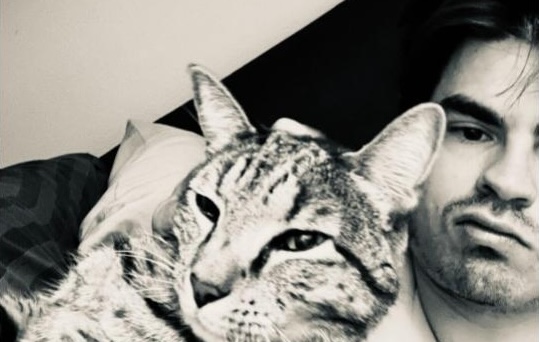
There’s something fascinatingly unstable about ‘housecAt’, the latest release from Austin duo art pop. It’s an album that feels simultaneously intimate and fragmented, polished in concept yet deliberately frayed around the edges. Across its runtime, brothers Max and Miles Grossenbacher construct a world where indie-rock vulnerability collides headfirst with club rhythms, distortion-soaked production, and the emotional disorientation of modern digital life.
The easiest comparison points might be the melancholic electronic textures of James Blake, the lo-fi emotional immediacy of Porches, or the hyperactive experimentation of 100 gecs. But ‘housecAt’ pulls them apart and reassembles them into something far messier and more emotionally conflicted.
At its core, the album operates on contradiction. These are deeply melancholic songs disguised as dance music; tracks filled with longing, emotional detachment, and quiet desperation, all buried beneath pulsing beats and blown-out synths. The duo describe it as music for “the saddest club,” and that framing feels accurate. This is music for the moment after the party peaks, when the lights feel too bright and every conversation starts sounding hollow.
What makes the album especially compelling is its fractured structure. Songs reappear in altered forms, themes are revisited from different angles, and entire sections are reversed or deconstructed as though the record itself is struggling to hold onto memory. ‘the party’s never over’ becomes the clearest example of this approach, morphing from something recognisably indie-pop into a frantic, fragmented dance piece by the album’s close. It’s disorientating, but intentionally so.
The DIY nature of the production only enhances that atmosphere. Recorded over several years in temporary spaces with minimal equipment, the album embraces its imperfection. Vocals blur into reverb haze, microphones clip and distort, textures bleed into one another. Yet instead of sounding unfinished, the roughness becomes part of the emotional architecture as the limitations of the recording process give the album its humanity.
For all its experimentation, though, ‘housecAt’ never loses sight of melody. Beneath the production tricks and genre collisions are genuinely strong songs, anchored by an instinct for hooks and atmosphere that keeps the record from drifting into abstraction.
In the end, art pop have created a restless, emotionally overloaded album that captures the strange loneliness of dancing through modern life with your headphones on and your thoughts too loud to escape.