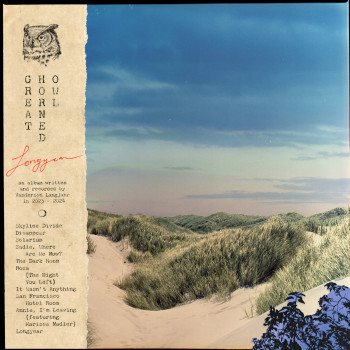
Longyear, the latest album from Portland-based Great Horned Owl, arrives like weather- subtle, slow-moving, and all the more powerful for it. It’s a world unto itself, built from the soft tension between solitude and connection, nature and memory, past and present.
The artist behind the moniker, Vanderson Langjahr, has been quietly honing his craft for over a decade, but this feels like a personal milestone- a culmination of years spent absorbing, refining, and listening closely to the internal and external landscapes around him. There’s a sense of patience in every track, like these songs were unearthed rather than written, discovered under layers of soil, field recordings, and sleepless nights.
Take ‘Sadie, Where Are We Now?’- a stunning centrepiece on the album, both emotionally and sonically. The track pulses with almost invisible detail: nearly 50 layers of instrumentation, each one recorded live, never sampled. It’s a song that doesn’t demand your attention but gently insists on it. With each listen, more emerges: textures, harmonics, ghosts of verses that feel like they were dreamed rather than composed.
Elsewhere, ‘Skyline Divide’ and ‘The Dark Room’ bring hammered dulcimer into the mix, while vibraphone glints through ‘Disappear’ like early morning light on water. It’s an unconventional palette for an indie folk album, but Langjahr never reaches for novelty. These instruments are chosen with care, not flash- serving the mood rather than disrupting it.

Lyrically, ‘Longyear’ reads like a diary kept by a poet who hikes alone. There are nods to literary figures- Bolaño, Knausgård- and sonic touchstones like Silver Jews and Destroyer. But this isn’t imitation. Langjahr speaks in his own voice: intuitive, elliptical, and emotionally transparent. You don’t need to understand every reference to feel the ache beneath them. On ‘Annie, I’m Leaving’, written in one breathless night, the heartbreak arrives with disarming clarity, unburdened by overproduction or overwriting.
The album’s title feels apt. These are long-arc songs- ones that took years to write and feel like they carry the weight of those years in their bones. There’s something ghostly but grounded about ‘Longyear’, like a letter from an old friend you never realised you missed until it arrived. It’s a record that never rushes to the point, because the point is in the process- in the building, unbuilding, and rebuilding of self through sound.
If ‘Longyear’ had a thesis, it might be that depth doesn’t need to announce itself. It just needs to be felt. These songs don’t scream for attention; they trust you’ll come to them when you’re ready. And when you do, they offer something rare: not escape, but quiet understanding.
Great Horned Owl reminds us of the slow burn- of the records that live with you, reshape you subtly, and leave a permanent mark not with volume, but with honesty. ‘Longyear’ is that kind of album. It doesn’t ask for much, but it gives everything.