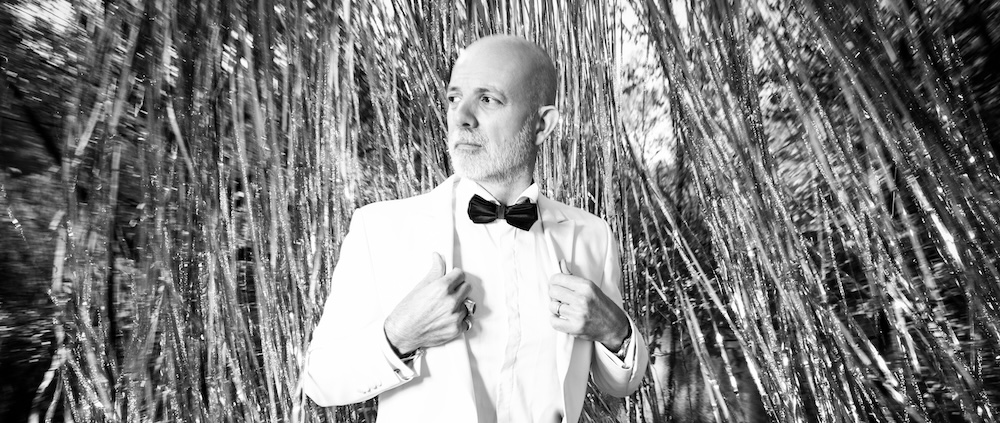
Italian pianist and composer Fabrizio Paterlini takes a more instinctive approach to his latest album Layers Naked, revisiting the creative territory of his 2025 release Layers through the comparatively stripped-back combination of piano, violin and cello.
Joined by Stefano Zeni and Marco Remondini, Paterlini moves away from the loops and electronic textures that characterised the preceding record, exploring what happens when compositions are given greater freedom to develop through collective improvisation.
The origins of the album can be traced back to the trio’s live performances, during which the musicians frequently found themselves moving beyond the original arrangements. Recognising the creative potential of those moments, they entered the studio without written arrangements, briefly discussing each piece before recording together in a single room.
The decision to retain the most expressive performances rather than the technically cleanest takes is an important aspect of the album’s character. ‘Vertical Limit’’ for example, was recorded in a single take, preserving the spontaneity of the musicians’ interaction without subsequent editing.
For Paterlini, whose extensive catalogue has explored everything from minimalist solo piano compositions to more expansive cinematic arrangements, the trio format offers an interesting change of perspective. The relationship between piano and strings provides sufficient emotional and melodic depth without the need for additional production, allowing the individual contributions of each musician to remain apparent.
There’s also a natural continuity between Layers Naked and his earlier work. His appreciation for reflective melodies, understated arrangements and the emotional possibilities of instrumental music remains central to the collection, even as the recording process introduces a greater degree of unpredictability.
The album concludes with ‘Death Is Not the End’, the first of his compositions to be set to words. It marks a subtle but significant development for a composer whose work has traditionally relied on instrumental expression, introducing another dimension to his established musical language.
With his newest collection, Fabrizio Paterlini offers a thoughtful exploration of the relationship between composition and improvisation. Its appeal lies in the simplicity of its execution, the sensitivity of its musicianship and the willingness of its contributors to allow the material to evolve naturally. It’s a wonderfully engaging addition to a catalogue that continues to develop through curiosity and collaboration.