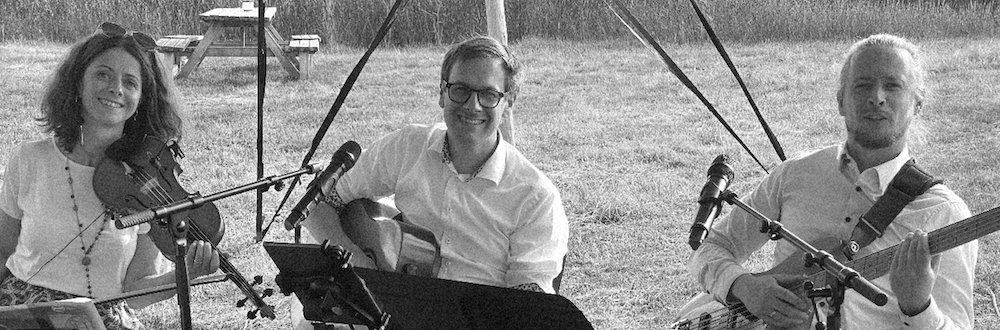
Tonneau continue to move further away from conventional indie-folk territory with ‘O Father, O Mother’, a quietly devastating single that transforms exhaustion, responsibility and emotional vulnerability into something wonderfully cinematic. Here, the Amsterdam trio build tension through atmosphere, restraint and carefully controlled emotional weight, creating one of their most affecting releases to date.
The song’s opening immediately signals a shift in direction. A worn, almost disoriented piano motif hangs in space beneath sparse bass and sharply placed violin, allowing the track to unfold with unusual patience. There is very little urgency in the arrangement, yet the emotional pressure beneath it feels constant. Tonneau resist the temptation to rush toward payoff, instead letting the mood settle slowly over us like fog gathering at dusk.
Ton van Dijk’s layered falsetto becomes the emotional centre of the track. His delivery feels fragile without ever becoming theatrical, carrying the kind of quiet fatigue that cannot easily be performed unless it is genuinely lived. There are moments throughout the song where the vocals feel almost suspended inside the production, floating between intimacy and distance as it plays.
The backstory behind the recording adds another layer of emotional gravity. The accidental inclusion of van Dijk’s daughter singing in the original demo transforms the song’s perspective entirely, turning what began as an abstract prayer into a deeply personal reflection on fatherhood and emotional endurance.
Musically, the band’s evolution is equally compelling. While earlier releases carried stronger traces of chamber folk and dreamlike indie textures, ‘O Father, O Mother’ leans further into alternative art-rock and ambient sound design. The absence of acoustic guitar leaves a noticeable emptiness in the arrangement that works entirely in the song’s favour. Instead, cold violin tones and low-end weight dominate the space, giving the track an almost post-rock atmosphere at times.
‘O Father, O Mother’ succeeds because it never tries to simplify the experience it describes. It acknowledges the beauty, pressure, monotony and quiet fear of parenthood all at once. In doing so, Tonneau have created a song that feels honest, weary and strangely comforting in its refusal to pretend everything is easy.